A front door should contrast with the exterior when the entrance needs to stand out as a focal point, and it should blend in when a quieter, more integrated look better supports the architecture. In Phoenix, AZ, the right approach depends on the home’s materials, color palette, scale, landscaping, and overall front door design.
Neither strategy is automatically better. The strongest result comes from deciding how much visual attention the entrance should receive compared with the rest of the façade.
What Does It Mean for a Front Door to Contrast?
A contrasting front door creates a noticeable visual difference between the door and the surrounding exterior.
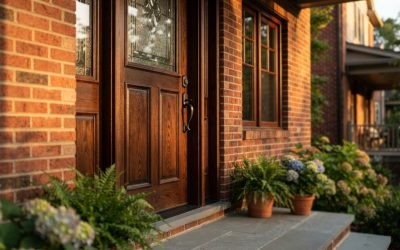
This difference can come from color, material, finish, texture, or even the amount of glass used in the door. A dark wood door against light stucco, for example, creates a clear focal point without requiring bright color.
Contrast can be especially useful when the entrance is recessed, partially shaded, or surrounded by a broad exterior wall. In these situations, the door may need more visual weight so visitors can identify the entry easily.
When Does Blending the Door Into the Exterior Work Better?
A blended front door works well when the home already has strong architectural features or a detailed exterior palette.
If the façade includes stone, dramatic rooflines, large windows, metal accents, or other visually dominant elements, a highly contrasting door may compete with the architecture. A more coordinated finish can help the entrance feel like part of the overall composition.
How Does Exterior Color Influence Front Door Design?
Exterior color is one of the first factors to consider.
Light stucco homes can support darker wood, charcoal, bronze, or other deeper door finishes. These combinations often create enough contrast to define the entry without appearing harsh.
Phoenix homes often use warm neutral palettes, including beige, sand, cream, terracotta, and gray. Front door colors can either reinforce those tones or intentionally create contrast while staying within a compatible color family.
Should a Modern Front Door Stand Out More?
Not necessarily.
Modern architecture often relies on clean lines, controlled material palettes, and intentional repetition. A modern door can either act as a focal point or blend into the façade depending on the overall design.
For example, a large wood door can provide warm contrast against white stucco and dark metal windows. In another home, a flush door finished in a tone similar to the surrounding wall may create a more minimal appearance.
Homeowners considering modern front entry doors should think about how the door contributes to the complete elevation rather than choosing a design based only on the door itself.
How Do Exterior Materials Affect the Decision?
Materials often matter as much as color.
Stone, stucco, brick, wood siding, metal, and concrete all create different textures and visual weight. The front door should respond to those characteristics.
A heavily textured stone façade may benefit from a simpler wood door that provides contrast through material rather than ornamentation. A smooth stucco exterior may support more visible wood grain, glass, or geometric detailing.
How Can Wood Create Natural Contrast?
Wood is useful because it can contrast with the exterior while still feeling natural.
A wood front door introduces warmth against masonry, stucco, concrete, or metal. The grain itself adds texture even when the finish is relatively neutral.
A deep walnut tone may create a bold focal point against pale walls, while a medium brown finish may blend more smoothly into stone or earth-toned exteriors.
What Role Does Glass Play in Contrast?
Glass can make a door feel lighter and more visually connected to the surrounding architecture.
Large glass panels can reduce the apparent mass of a dark or oversized front door. Smaller glass inserts can add contrast without changing the overall character of the entry.
When the proportions, frame color, or pattern of the door glass connect with the home’s existing windows, the entrance often feels more cohesive.
Should Front Door Hardware Match the Exterior?
Hardware does not have to match every exterior detail exactly, but it should relate to the overall palette.
Black hardware may coordinate with dark window frames or modern exterior lighting. Bronze or warmer finishes may work better with natural stone, wood, or Southwestern architecture.
A dark pull on a lighter wood door creates definition, while hardware that closely matches the door finish produces a quieter effect.
How Can Landscaping Affect the Way a Front Door Looks?
Landscaping changes how much visual attention the entrance receives.
Dense plants, trees, or deep shade can make a door less visible from the street. In these situations, stronger contrast may help define the entrance.
Minimal landscaping can have the opposite effect. If the façade is open and the front door is already highly visible, a more restrained door finish may be enough.
How Should Phoenix Homeowners Decide Between Contrast and Blending?
Start by deciding what role the front door should play.
If the entrance needs stronger emphasis, use contrast through color, material, scale, or glass. If the home already has several dominant architectural features, consider a door that coordinates more closely with the surrounding exterior.
Evaluate the door from the street, walkway, and immediate entry area rather than looking at samples in isolation.